
Seventeen Indo-Canadians, including NDP leader Jagmeet Singh and Defence Minister Harjit Sajjan, won Canada's parliamentary elections on Tuesday with Liberal Party leader and Prime Minister Justin Trudeau returning to power in the snap polls.

Besides criticising CM Arvind Kejriwal on scores of issues, Shah alleged the AAP government made only promises throughout its tenure and now in the last three months, public money was being spent on advertisements for its announcements.

"Shouldn't they get Indian citizenship? Shouldn't their human rights be protected?" Shah asked the audience which responded with a resounding "yes".

'Who sent Masood Azhar back to Pakistan? Who bowed down to terror and released him? Not the Congress, but it was the BJP government'
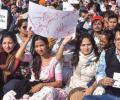
'The Bodos and the Assamese were at each other's throats, the Assamese Muslims and the Bengali Muslims were at each other's throats, the Bengali speaking Muslims and Hindus were coming together against the Assamese speaking caste Hindus and the plains tribes and vice versa.'
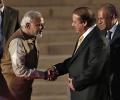
The Pak PM said he told the UN that it was its resolution on Kashmir and not that of Pakistan therefore it was the body's duty to implement it.

'Wherever in the world there is political instability, those countries are beset with severe crises today. But India is in a much better position than the rest of the world due to the decisions taken by my government in the national interest,' President Droupadi Murmu said in her address to both Houses of Parliament.
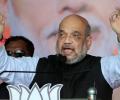
Unfazed by the protests against the Act, Shah challenged protesters to oppose the legislation as much as they can. He also asked students who are opposing the legislation to read it properly and understand its meaning.

'Today, if the international community is seeking space, if not place, here, then the message is not unclear in any which way. 'It does not reflect well on the nation's standing in the international arena, where human rights issues go a long way in building bilateral relations and benefiting from international cooperation, more than any aspect of politics and diplomacy,' N Sathiya Moorthy.
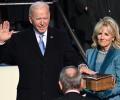
World leaders said they were looking forward to working with Joe Biden, as they welcomed the 46th President of the United States with praise and took parting shots at his predecessor Donald Trump.
'No prime minister of India is averse to normalise relations with Pakistan, if it is possible to do so without altering our fundamental position on Jammu and Kashmir,' notes Ambassador T P Sreenivasan.
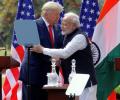
'New Delhi and Washington are now on the same page, on dealing with growing Chinese assertiveness, across the entire Indo-Pacific region,' notes Ambassador G Parthasarathy, Chancellor, Central University of Jammu.
Calculated or otherwise, if Azhagiri's firing of the first salvo after Karunanidhi's death does not create some space for him to politico-electorally exploit at a later date, there may not be any space left for him at all, says N Sathiya Moorthy.

During Vajpayee's tenure, he was there as an indispensable insider, witness to every action that had an impact on history: Pokhran-II (nuclear tests in 1998), the 1999 Kargil conflict between India and Pakistan, the Indo-Pak Agra Summit in 2001, intense engagement with the United States on nuclear issues besides the Kandahar hijack.
Down and out Congress is all set to use 'Modi's doublespeak on CAG reports' and invitation to Nawaz Sharif as weapons to target the prime minister-designate. Renu Mittal reports.

"Will anybody want a servant that who is on vacation when needed at home? And nobody knows where he is," he continued.
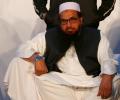
The perpetrators of the 2008 Mumbai attack, who shot dead 166 people, had confessed to details that should have been enough to hang him, but Pakistan enjoyed his anti-India rhetoric and let him spread his tentacles. A revealing excerpt from Khaled Ahmed's Pakistan's Terror Conundrum.
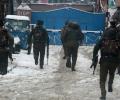
'We need to be in a perpetual state of aggression, and able to swiftly change the goal posts to keep Pakistan in a state of imbalance,' argues Sanjeev Nayyar.
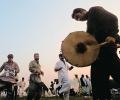
The Kabuliwalas of Kolkata, traditional moneylenders, have seen their numbers shrink.
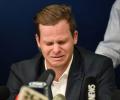
A ball-tampering scandal that devastated Australia cast a dark cloud over a dramatic cricketing year

The Enforcement Directorate has managed to sniff out over Rs 9,000 crore as suspected haul from money laundering in a decade, but it has yet to link those against anyone successfully in a court.

We take a look at Time magazines top world leaders.

India's majoritarian regime is now making a dangerously fast-paced move towards theocracy, like its western counterpart did a few decades ago, warns Mohammad Sajjad.

Veteran Pakistani diplomats Syed Ibne Abbas and Jalil Abbas Jilani would be the new Pakistani envoys to India and the United States respectively as part of a wide-ranging reshuffle of envoys in key capitals around the world.

'Our biggest problem has been keeping this country together.' 'Nation building is never easy. It is a very difficult task.' 'Even 70 years is not too long a time.'
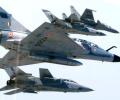
'We could quibble with each other whether there were 25 terrorists killed or 250 killed.' 'The message is more that India undertook such an aerial attack and this attack has actually changed the paradigm.' 'The change in paradigm is that India has shown by the surgical strike in 2016 and the aerial strike of 2019 that we will not just sit back and tolerate terrorism which killed so many of our people.' 'We will hit back and by hitting back we will raise the costs of such activities.'

In perhaps the first major conference on the United States-India strategic partnership in the aftermath of the Khobragade controversy that plunged the bilateral relationship in a downward spiral and is now in the process of being resurrected, the undeniable consensus among the panelists and participants was that much ballyhooed strategic convergence between Washington and New Delhi has dissipated.

By weakening Sharif, the corps commanders could have a final say in important matters like relations with India, dealing with Taliban militants, interacting with Americans and once again achieving strategic depth in post-NATO Afghanistan. Which is why they may be behind the unrest in Pakistan led by Imran Khan and Dr Tahirul Qadri, says Shahzad Raza.
'In 2013, Modi said his government would be of Dalits and OBCs.' 'During his tenure, the highest number of atrocities have taken place.' 'What they want is that this Ambedkar Constitution must not be practised in India in the future.'
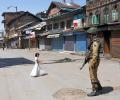
We must repeal AFSPA to begin to heal Kashmir, and to enhance India's moral stature and that of the army, says Ajai Shukla
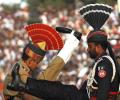
'Despite Modi's high-flown rhetoric about good-neighbourly relationships in South Asia, he lacks a road map how to proceed -- be it with Bangladesh or with Sri Lanka and Pakistan... But a deeper question arises here: Did he duck on his own accord or under the diktat from the RSS, asks Ambassador M K Bhadrakumar.

'When you see Modi standing there at the G20, or in New York or at the United Nations, amongst all the leaders, he stands out in the crowd.' 'He looks different, he sounds different, and he has something about his quality of presentation, his oratorical skills, which clearly set him apart from the crowd.' 'The relationship between Modi and the rest of the world and India and the rest of the world has been reset as a result of the election in 2014.'
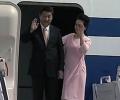
'As the first leaders of their respective countries born after Indian Independence and the Chinese Liberation, Modi and Xi would be expected to have the ability to overcome the traditional mindsets and the hierarchical nature of their official/bureaucratic establishments,' say Alka Acharya and Jabin T Jacob.
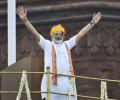
Following is the full text of Prime Minister Narendra Modi's address from the ramparts of the Red Fort on the 73rd Independence Day.

Here is a recap of all the big events that shaped the world last week.

'If you invest your entire capital in talks, you cannot abruptly change gear and decide on war.'

The clichd path of conducting 'uninterrupted and uninterruptable' bilateral dialogue with Pakistan to improve ties remains unimplemented and un-implementable under prevailing circumstances that are unlikely to alter in the near future, says Rahul Bedi.

'One big problem for the RSS is, while they spread their ideology of hard, Hindu-ised Indian nationalism, the absence of their own pantheon of modern nationalist giants. They missed out on the freedom movement quite comprehensively, in some ways comparable to the Muslim League and latter-day Communists. They have to find heroes elsewhere.' 'They borrow who they can from the Congress, like Madan Mohan Malviya and Sardar Patel, and then steal the entire lot of revolutionaries, from Bhagat Singh to Netaji, never mind that many of them were extreme leftists.'
.jpg)
It's perverse to rationalise 'controlled' killings or torture -- without going down a slippery moral slope. Once the state stoops to torture, it's liable to sink into tyranny, says Praful Bidwai.

Read the full transcript of President Obama's State of the Union address on Wednesday at the US Capitol in Washington.
